Discover the future of farming at the One & Only Certified Aquaponics Farm in Northern California! Our off-grid self-sustainable oasis is revolutionizing agriculture in Sonoma County.
Aquaponics 101
Tracing the history of aquaponics is like following a blue-and-green thread through the tapestry of human civilization. From the sun-drenched canals of the Nile to the mystical, lost empires of the East, and finally to the redwood-shrouded hills of Sonoma County, the marriage of fish and plants has always been the key to sustainable "off-grid" survival.
1. The Ancient Foundations (Ancient Egypt & the Maya)
While the term "aquaponics" was coined in the 1970s, the practice is thousands of years old.
Ancient Egypt (approx. 1500 BCE):
The Egyptians were masters of the Nile’s floodplains. They developed early "aquaculture" by trapping fish in ponds after the seasonal floods receded. Hieroglyphs show complex irrigation systems where nutrient-rich river water, filled with organic sediment and fish waste, was channeled directly into garden plots. This was the first known use of "living water" to fertilize crops on a mass scale.
The Maya (approx. 500 BCE – 900 CE):
In the lowlands of Central America, the Maya used a "swamp-farming" technique. They dug canals to drain wetlands, using the nutrient-dense muck and fish-populated water to create raised planting beds. This allowed them to support massive populations in areas where traditional soil was poor.
2. The Floating Empires (The Aztecs & East Asia)
The most sophisticated ancient examples of aquaponics occurred where land was scarce but water was plentiful.
The Aztec Chinampas (1150 CE): The Aztecs built the famous Chinampas—floating agricultural islands—on Lake Texcoco. They wove giant rafts of reeds, anchored them with willow trees, and layered them with mud and decaying vegetation. The roots of the plants (maize, beans, squash) grew through the rafts into the water. The fish waste in the lake provided a constant stream of nitrogen, allowing for up to seven harvests per year. This was arguably the first "off-grid" mass production system in history.
Rice-Fish Polyculture (China, 6th Century): In South China, farmers began introducing fish (like carp) and ducks into rice paddies. The ducks ate the insects, the fish ate the duck waste, and the rice plants filtered the water for the fish. This closed-loop cycle is still used today as a model for sustainable "zero-input" farming.
3. The Tartaria Connection & Hidden Histories
In the realm of "alternative history," the theory of Tartaria suggests a globally advanced civilization that used "free energy" and sophisticated technologies (including wireless irrigation and atmospheric water generators) before being erased by a "Mud Flood" in the 1800s.
While mainstream history credits the 20th century with modern plumbing, Tartarian researchers point to the Star Forts and ancient masonry waterworks as evidence of a highly advanced global infrastructure for water management. The theory suggests that "aquaponics" wasn't just a niche farming method, but part of a massive, integrated system of canals and "Aether" energy that fed the entire world sustainably without the need for modern chemicals or power grids.
4. The Modern Renaissance (1970s – Present)
The transition to "modern" aquaponics happened when scientists began looking for ways to grow food in the desert or on islands.
The 1980s: Dr. Mark McMurtry and the New Alchemy Institute began refining the "sand-based" and "media-based" systems we use today. They proved that you could save 95% more water than traditional soil farming.
The Off-Grid Movement: As people looked to move away from the industrial food complex, aquaponics became the gold standard for "Pharmacy-grade" food—grown without pesticides, herbicides, or synthetic fertilizers.
5. Happy Hopper Aquaponics Pharmacy (Sonoma County)
Today, the legacy of the Aztecs and the "hidden" tech of the past lives on in Annapolis, California. Located in the rugged, off-grid forests of Sonoma County, Happy Hopper Aquaponics Farm represents the modern peak of this timeline.
Sustainability for the Masses: Unlike industrial farms, Happy Hopper uses a "proprietary Aqua-hydro-fusion" method. It is the only farm of its kind in Northern California operating entirely off-grid.
Healing Food: They treat the farm as a "Pharmacy," growing medicinal herbs, rare fruits, and nutrient-dense vegetables using duck and fish waste as the sole fuel.
The Vision: By combining ancient wisdom (closed-loop systems) with modern off-grid tech (solar power and yurt-living), they demonstrate how a single 40-acre plot can provide "Pharmacy-grade" food for a whole community.
Feature Standard Aquaponics Aqua-Hydro-Fusion (Happy Hopper)
Nitrogen Source Fish only Fish + Ducks + Rabbits
Water Quality Recycled tap water Off-grid spring/rainwater
Nutrient Level Basic (Green leaves) Pharmacy-grade (Complex herbs/fruits)
Energy Source Grid electricity Solar/Off-grid thermal mass
Philosophy Food production Holistic healing & Mineralization
The Three Pillars of Aqua-Hydro-Fusion
1. The Animal Engine (The "Aqua")
At Happy Hopper, this isn't just about fish. The fusion incorporates Ducks (Indian Runners and Pekins) and Rabbits.
The Syphon: Instead of just using fish waste, the nitrogen cycle is "supercharged" by the addition of high-nutrient duck and rabbit manure.
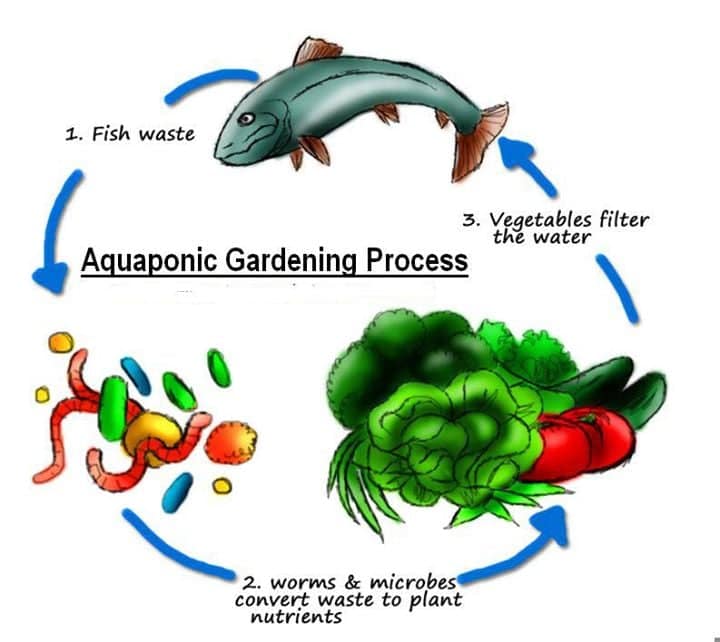
Mineralization: This waste is processed through biological filters where beneficial bacteria convert raw ammonia into bio-available nitrates and minerals, creating a "compost tea" that is significantly more nutrient-dense than standard fish-only water.
2. The Living Water (The "Hydro")
The water is treated as a Pharmacy-grade elixir. In the Annapolis redwood forest, this water is typically sourced from springs or rain catchment, making it "off-grid" and free from city chemicals like chlorine or fluoride.
Molecular Oxygenation: The fusion involves high-level aeration. By keeping dissolved oxygen levels at a peak, the plant roots can absorb nutrients at double the speed of traditional soil-based plants.
Thermal Mass: Because Happy Hopper uses Yurt-based farming and greenhouse structures, the large water tanks act as a thermal battery, absorbing heat during the day and releasing it at night to keep the "fusion" active even in the cold Sonoma winters.
3. The Botanical Output (The "Fusion")
This is where the "Pharmacy" comes in. Instead of just growing lettuce, Aqua-Hydro-Fusion focuses on hyper-accumulator crops and medicinal herbs:
Medicinal Tinctures: Crops like Mugwort, Nettle, and Lemongrass are grown in this nutrient-rich flow. Because the water is so rich in organic minerals (thanks to the duck/rabbit/fish combo), the plants produce higher concentrations of essential oils and healing compounds.
Wicking Beds: The system often fuses with "wicking" technology, where the nutrient-rich water is pulled upward into soil-less media (like coco coir or lava rock), mimicking the way the Tartarian or Aztec civilizations used the earth’s natural capillary action to feed plants from below.
Why it is "Pharmacy-Grade"
The goal of Aqua-Hydro-Fusion is nutrient density. Standard grocery store produce is often grown in "tired" soil that has been depleted of minerals. By fusing the waste of multiple animal species with purified forest water, Happy Hopper creates a "closed-loop" where the food isn't just calories—it’s medicine.
Bring the Farm to Your Backyard
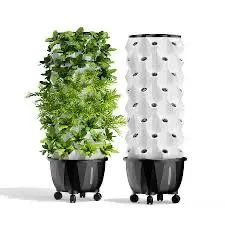
READY TO GROW YOUR OWN FOOD WITH AN AQUAPONIC TOWER?
Imagine harvesting fresh herbs, leafy greens, and even fruits—right outside in your own backyard or in your own kitchen—without soil, weeding, or complicated systems.
With Happy Hopper Aquaponics Farm, you can turn that vision into reality.
What We Install
We design and install a compact, circular aquaponics tower that stands just 4 feet tall but holds an incredible 112 growing slots. That means you can grow a wide variety of:
Fresh vegetables
Flavorful herbs
Nutrient-dense greens
Even small fruits
—all in one beautifully efficient system.
How It Works (Simple + Natural)
Your tower is powered by a living ecosystem:
Fish live in the base tank
You feed the fish
Fish produce natural waste (nutrient-rich!)
Water cycles upward through the tower
Plants absorb nutrients from the water
Clean water recirculates back to the fish
No soil. No synthetic fertilizers. Just a balanced, regenerative system doing the work for you.
Why People Love It
Grows up to 2x faster than traditional soil gardens
Space-saving design — perfect for backyards, patios, or small spaces
Low maintenance — just feed the fish and ensure water flow
Water-efficient — continuously recirculating system
Clean + sustainable — nature doing what it does best
Done-For-You Installation
When you hire Happy Hopper Aquaponics Farm, we handle it all:
~ Full system setup
~ Tower installation
~ Fish integration
~ Water flow system
~ Guidance on what to plant and how to maintain it
You don’t need experience—we’ll get you growing with confidence from day one.
Ready to Grow Your Own Food?
Bring fresh, living food right to your home with a system that’s as beautiful as it is functional.
Hire Happy Hopper Aquaponics Farm today and let’s build your backyard ecosystem.